
10 free EC-Council 312-50v13 CEH v13 practice questions with the correct answer and a full explanation for each, taken from the CertStash pack of 1,049 questions. Work through them, then open each answer to check your reasoning.
Get all 1,049 questions (US$39) · Download these 10 as a PDF
Question 1
In this form of encryption algorithm, every individual block contains 64-bit data, and three keys are used, where each key consists of 56 bits.
Which is this encryption algorithm?
Show answer and explanation
Correct answer: B. Triple Data Encryption Standard
Triple Data Encryption Standard (3DES) is characterized by using three 56-bit keys and operating on 64-bit blocks of data. It applies the DES algorithm three times to each block, making it the only option that matches all specified criteria: three keys of 56 bits each and 64-bit data blocks.
Why the other options are wrong
- A. IDEA uses 128-bit keys and 64-bit blocks, not three 56-bit keys.
- C. AES uses 128, 192, or 256-bit keys and operates on 128-bit blocks, not 64-bit blocks.
- D. MD5 is a hash function, not a block cipher, and does not use keys in the traditional encryption sense.
Question 2
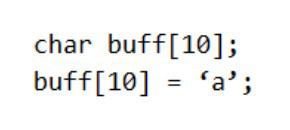
John is investigating web-application firewall logs and observers that someone is attempting to inject the following:
What type of attack is this?
Show answer and explanation
Correct answer: B. Buffer overflow
The code snippet shows a character buffer of size 10 being assigned the value 'a', which appears to be demonstrating a buffer overflow vulnerability. Buffer overflow attacks occur when data is written beyond the allocated memory boundaries of a buffer, potentially overwriting adjacent memory and causing program crashes, unauthorized code execution, or privilege escalation. This is a classic example of how buffer overflow vulnerabilities are exploited in C/C++ programs.
Why the other options are wrong
- A. SQL injection targets database queries with malicious SQL code, not memory buffers.
- C. CSRF (Cross-Site Request Forgery) is a web attack involving unauthorized requests, unrelated to buffer memory.
- D. XSS (Cross-Site Scripting) involves injecting malicious scripts into web pages, not exploiting memory buffers.
Question 3
John, a professional hacker, performs a network attack on a renowned organization and gains unauthorized access to the target network. He remains in the network without being detected for a long time and obtains sensitive information without sabotaging the organization.
Which of the following attack techniques is used by John?
Show answer and explanation

Question 4
You are attempting to run an Nmap port scan on a web server.
Which of the following commands would result in a scan of common ports with the least amount of noise in order to evade IDS?
Show answer and explanation
Correct answer: C. nmap -sT -O -T0
The command 'nmap -sT -O -T0' uses TCP connect scan (-sT), OS detection (-O), and timing template T0 (paranoid/slowest). T0 sends one probe at a time with long delays, generating minimal network noise and traffic patterns that are least likely to trigger IDS detection compared to the other options.
Why the other options are wrong
- A. -A is aggressive scan mode with maximum noise; -Pn skips ping but doesn't reduce IDS detection.
- B. -sP is ping scan; -p-65535 scans all ports generating high traffic; -T5 is the fastest timing template creating maximum noise.
- D. -A is aggressive and noisy; –host-timeout does not aid evasion; -T1 (sneaky) is faster and noisier than T0, so it is less stealthy.
Question 5
This wireless security protocol allows 192-bit minimum-strength security protocols and cryptographic tools to protect sensitive data, such as GCMP-256, HMAC-SHA384, and ECDSA using a 384-bit elliptic curve.
Which is this wireless security protocol?
Show answer and explanation
Correct answer: B. WPA3-Enterprise
WPA3-Enterprise provides 192-bit minimum encryption strength and supports advanced cryptographic tools including GCMP-256 (Galois/Counter Mode Protocol with 256-bit encryption), HMAC-SHA384, and ECDSA with 384-bit elliptic curves. These are enterprise-grade security features designed for organizations requiring the highest protection standards.
Why the other options are wrong
- A. WPA3-Personal provides 128-bit security, not 192-bit minimum strength.
- C. WPA2-Enterprise does not support 192-bit protocols or GCMP-256/HMAC-SHA384; it predates these advanced specifications.
- D. WPA2-Personal is the consumer-grade WPA2 version with lower security standards than WPA3-Enterprise.
Question 6
What are common files on a web server that can be misconfigured and provide useful information for a hacker such as verbose error messages?
Show answer and explanation
Correct answer: C. php.ini
is a common web server configuration file that can expose verbose errors when misconfigured. Settings like 'display_errors=On' show detailed error messages to users, revealing application structure and backend details.
Why the other options are wrong
- A. httpd.conf controls Apache behavior but is not typically the source of verbose error messages.
- B. administration.config is an IIS file for management settings, not verbose error output.
- D. idq.dll is an IIS indexing component; exploitable, but not a source of verbose error messages.
Question 7
Gerard, a disgruntled ex-employee of Sunglass IT Solutions, targets this organization to perform sophisticated attacks and bring down its reputation in the market. To launch the attacks process, he performed DNS footprinting to gather information about DNS servers and to identify the hosts connected in the target network. He used an automated tool that can retrieve information about DNS zone data including DNS domain names, computer names, IP addresses, DNS records, and network Whois records. He further exploited this information to launch other sophisticated attacks.
What is the tool employed by Gerard in the above scenario?
Show answer and explanation
Correct answer: D. Bluto
Bluto is an automated DNS reconnaissance tool designed to retrieve comprehensive DNS zone data including DNS domain names, computer names, IP addresses, DNS records, and network Whois information. It is specifically built for DNS footprinting and enumeration attacks, matching Gerard's described actions perfectly.
Why the other options are wrong
- A. Towelroot is an Android rooting tool, not a DNS reconnaissance tool.
- B. Knative is a Kubernetes-based serverless platform, not related to DNS footprinting.
- C. zANTI is a mobile penetration testing framework, not specifically a DNS zone transfer or footprinting tool.
Question 8
Tony is a penetration tester tasked with performing a penetration test. After gaining initial access to a target system, he finds a list of hashed passwords.
Which of the following tools would not be useful for cracking the hashed passwords?
Show answer and explanation
Correct answer: D. netcat
Netcat is a network utility for reading and writing data across network connections; it is useful for network reconnaissance and communication but has no cryptographic functionality for cracking or verifying hashed passwords. Hashcat and John the Ripper are specialized password cracking tools, and THC-Hydra performs brute-force attacks.
Why the other options are wrong
- A. Hashcat is a GPU-accelerated password cracking tool specifically designed for hash cracking.
- B. John the Ripper is a widely-used password cracking tool that supports numerous hash formats.
- C. THC-Hydra performs brute-force password attacks and can be used against hashed password systems.
Question 9
Which of the following Google advanced search operators helps an attacker in gathering information about websites that are similar to a specified target URL?
Show answer and explanation
Correct answer: D. [related:]
The 'related:' operator displays websites similar to a specified target URL. An attacker can use this to find competing or similar websites that may share similar vulnerabilities, configurations, or security postures as the target organization.
Why the other options are wrong
- A. inurl: searches for keywords within URLs, not for similar websites.
- B. info: displays cached and link information about a specific URL, not similar sites.
- C. site: restricts search results to a specific domain, not for finding similar websites.
Question 10
You are a penetration tester working to test the user awareness of the employees of the client XYZ. You harvested two employees’ emails from some public sources and are creating a client-side backdoor to send it to the employees via email.
Which stage of the cyber kill chain are you at?
Show answer and explanation

That was 10 of 1,049.
The full EC-Council 312-50v13 CEH v13 pack has all 1,049 questions, each with the answer, the explanation and why the other options are wrong, plus a questions-only copy for timed runs. US$39, paid once, with free monthly updates and a pass-or-your-money-back guarantee.